A selection of our most popular Protozoa cultures
Sarcodines
-
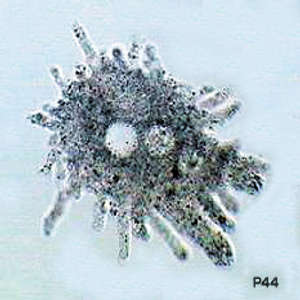 P44 Amoeba proteus
A very large and vigorous strain which displays protoplasmic streaming (cyclosis), prey encapsulation and phagocytosis. An excellent textbook species for ...
P44 Amoeba proteus
A very large and vigorous strain which displays protoplasmic streaming (cyclosis), prey encapsulation and phagocytosis. An excellent textbook species for ...
Ciliates
-
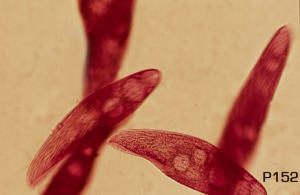 P152 Blepharisma sp.
A remarkable pink coloured protist and probably the best example of all for showing typical ciliate morphology.The naturally stained pink ...
P152 Blepharisma sp.
A remarkable pink coloured protist and probably the best example of all for showing typical ciliate morphology.The naturally stained pink ...
- P177 Colpidium striatum A small bactivorous ciliate and ideal food prey for Podophyra, Actinosphaerium, Amoeba, and other predatory protists.
- P231 Euplotes patella A very appealing example of a typical hypotrich that exemplifies the diversity of form amongst the ciliates. Their characteristic cirri ...
- P305 Paramecium bursaria An excellent example of a symbiotic relationship with an algae. The green colouration of the ciliate is imparted by the ...
- P320 Paramecium caudatum The 'slipper animalcule' named after the resemblance of its pellicle to the shape of a slipper. Probably the most popular ...
-
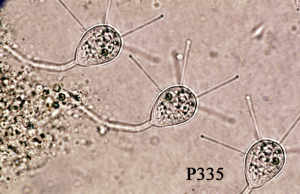 P335 Podophyra (discophyra) collini
An exemplary carnivorous suctorian for demonstrating the characteristic tentacular feeding mechanisms.The effectiveness of the tentacles for capturing and ingesting the ...
P335 Podophyra (discophyra) collini
An exemplary carnivorous suctorian for demonstrating the characteristic tentacular feeding mechanisms.The effectiveness of the tentacles for capturing and ingesting the ...
- P346 Spirostomum ambiguum One of the largest ciliates, up to 4mm in length and preferring nearly anaerobic (polysaprobic) conditions where organic decay sustains ...
- P365 Stentor coeruleus The textbook 'Trumpet animalcule' a large bluish-green pigmented species with a visibly distinct lobular macronucleus. A prominent crown of membranelles ...
- P380 Stylonychia mytilus A large and visibly interesting hypotrich, ideal for studying ciliary organelles, feeding and locomotion. Forms dormant viable cysts.
- P440 Vorticella similis The 'Bell animalcule' a good example of a stalked peritrich, the mature stage (zooid) is attached to the substratum by ...
Flagellates
-
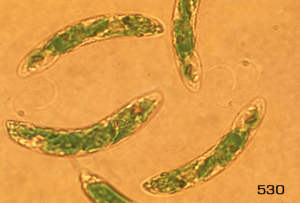 P530 Euglena gracilis
Typical green phytoflagellate for illustrating flagellate motility and photoautotrophic nutrition. The distinct eyespot (stigma) stimulates the cells phototactic response towards ...
P530 Euglena gracilis
Typical green phytoflagellate for illustrating flagellate motility and photoautotrophic nutrition. The distinct eyespot (stigma) stimulates the cells phototactic response towards ...
- P540 Euglena spirogyra A larger species for showing 'textbook' euglenoid morphology.
- P555 Peranema trichophorum A superb phagotrophic flagellate which shows a very distinct flagellum, even under low power optics. The species is colourless and ...